



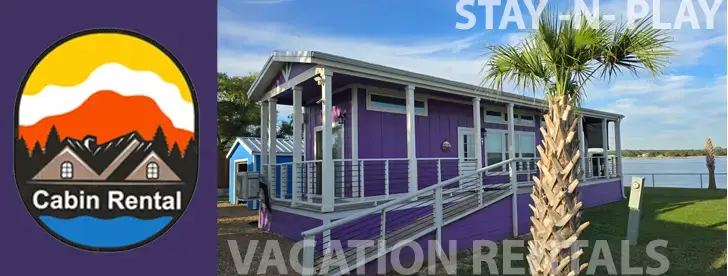



Cabin Rentals
Our cozy Lakeside Cabin Rentals at Lakeview Marina are the perfect way to extend your stay at Eagle Mountain Lake. Whether you're here with a few friends or the whole crew, our cabins offer everything you need for a memorable escape—foosball, shuffleboard, docks, and more! Spend your days on the lake, and in the evenings, stroll over to The Anchor on EML (open seven days a week) or simply enjoy the lakeside sunset. Play a little longer, stay a little longer—your perfect lake getaway is here!
(Click Here) to see more details!

Looking for the ultimate pit stop before hitting Eagle Mountain Lake? Our Bait Shop & Ship Store has everything you need to turn an ordinary lake day into an epic adventure! Need a boat rental? Done. Forgot the fishing gear? We’ve got you covered. Want to chill with an ice-cold beer? It’s waiting! We even have snacks, gas, and all the essentials to keep your day going smoothly. Trust us, you won’t leave empty-handed.
Come on in, grab your gear, and get ready for a day of fun on the lake! (Click Here)

Looking for the perfect lakeside getaway? The Lakeview Marina RV Park has you covered! With spacious sites, easy access to Eagle Mountain Lake, and a boat dock right at your doorstep, it’s the ideal spot for adventure seekers. After a day on the water, unwind with a hot shower or toss a load in our on-site laundry mat. Whether you're here for a weekend or a longer stay, you’ll feel right at home with everything you need for the perfect retreat.
(Click here) to learn more and book your stay!

The Anchor at Lakeview Marina
is the ultimate place to unwind after a fun-filled day on Eagle Mountain Lake. With amazing food, a great atmosphere, and a full-service bar and grill, it’s the perfect spot for friends and family to gather. Enjoy a our lakeside views, or grab a bite for lunch or dinner, all while soaking in the lakeside atmosphere. Whether you're craving a burger or a cold drink, The Anchor on Eagle Mountain Lake has it all. Stop by for great food, fun, and entertainment! Call us at (682) 224-2295 or follow us on facebook at https://www.facebook.com/profile.php?id=61576212793049
(See the MENU for The Anchor EML) - (Click Here)





The story of recreational boating and waterfront access in Denton, Texas, is deeply intertwined with the development of its local waterways. Understanding the Denton boat ramp history offers a fascinating look at how community needs evolved alongside engineering advancements. For decades, reliable entry points to lakes and rivers were crucial for sportsmen, families, and commercial users alike. This comprehensive guide explores the rich background detailing the importance and evolution of these vital structures in Denton County.
Before formalized boat ramps existed, accessing water bodies near what is now modern-day Denton required navigating natural shorelines or using rudimentary crossings. As early settlement increased around key waterways, the need for efficient and reliable local waterway access Denton became paramount. The initial focus was purely functional: getting boats—whether small rowboats or larger vessels—into navigable depths to facilitate fishing, transport, and recreation.
The foundational period of boating in this region mirrored Texas's broader growth pattern. Early boat ramps were often temporary structures built by local groups needing immediate access points. These early efforts laid the groundwork for what would eventually become permanent, engineered boat ramps in Denton Texas today. The historical development shows a consistent demand from the growing population base that sought leisure activities on nearby lakes.
As boating technology advanced—from simple wooden skiffs to powerful motorboats requiring deep water launch points—so did the engineering behind Denton boat ramp history. Early ramps were relatively basic, designed primarily for vehicle rollout onto a gradual slope. However, as usage increased and environmental concerns grew, modern design principles had to be incorporated.
The transition from natural embankments or simple gravel slips to concrete-reinforced facilities marks a major turning point in the history of these sites. These engineered structures are designed not only for vehicle stability but also for minimizing erosion impact on sensitive lake and river bottoms, reflecting modern environmental stewardship alongside accessibility.
A boat ramp is far more than just a concrete slope; it serves as an economic anchor and a social gathering point for the entire region. The reliable availability of these facilities directly supports multiple industries, including tourism, fishing charters, and recreational sales.
For Denton County residents specifically, the ramps represent preserved community leisure space. They provide consistent access to natural resources that are essential for mental well-being and outdoor recreation. Consequently, maintaining high quality local waterway access Denton is a continuous focus for local government bodies committed to preserving recreational opportunities.
The history of these ramps also features strong community involvement. Local volunteer groups often play key roles in the upkeep and advocacy surrounding boat ramp facilities, demonstrating a deep sense of ownership over their natural resources. This collective effort ensures that boat access points remain functional for future generations.
Today, maintaining these crucial waterfront entry points requires balancing high usage with environmental protection and infrastructure longevity. The discussion surrounding the current state of boat ramps in Denton Texas often revolves around updating outdated structures or expanding facilities to meet growing recreational demand.
When researching Denton boat ramp history today, it is important to note that the focus has shifted toward multi-use access—allowing not just motorboats, but also kayaks and paddleboards easy entry. This adaptability ensures the ramps serve a diverse spectrum of water users while adhering to strict safety codes.
In conclusion, the Denton boat ramp history is a compelling narrative of human ingenuity meeting natural geography. These facilities have evolved from simple necessities into highly engineered community assets, solidifying Denton’s reputation as an area committed to outdoor enjoyment and preserving its rich connection to water recreation.
A boat ramp is far more than just a sloped path into the water; it is critical infrastructure that facilitates safe, reliable access for launching boats. Whether you own a small fishing skiff or a large recreational yacht, understanding how your specific boat ramp operates—and what to look for when selecting one—is essential for marine safety and efficiency.
This comprehensive guide will explore the various types of boat ramps available today, detail proper maintenance practices, and outline best operational procedures so you can maximize your time on the water while keeping equipment secure. Choosing the right boat ramp system is a significant decision that impacts usability year after year.
The term "boat ramp" covers several different engineering solutions, each designed to suit specific environmental conditions and user needs. Understanding these variations helps in selecting the perfect fit.
The material used in the boat ramp construction affects longevity and maintenance frequency. Concrete ramps offer permanence, while composite materials provide a balance of strength and manageable weight for portability.
Selecting an ideal boat ramp requires evaluating several physical and logistical factors related to your specific waterfront property. Do not overlook these details when planning or upgrading your access point.
The transition from land to water must be gradual enough for safe vehicle operation, yet steep enough that the hull of a boat can safely exit into deeper water without grounding immediately. Professional assessment is recommended to calculate the optimal slope angle based on local bathymetry.
A high-traffic boat ramp must support not only vehicles but also the dynamic weight distribution of large boats, trailers, and equipment being launched simultaneously. Ensure any chosen system has a load rating significantly higher than your anticipated maximum use to prevent structural failure.
Proper maintenance is crucial for maintaining safe passage when launching boats. Neglecting routine care can lead to costly repairs or, worse, dangerous operational failures of the boat ramp structure.
Saltwater exposure, freeze-thaw cycles, and constant mechanical stress are primary enemies of any boat ramp. Using appropriate sealants during maintenance helps protect materials from corrosion and water penetration.
Safety must be the paramount consideration whenever utilizing a boat ramp system. Adherence to proper procedures minimizes risk for operators, vehicles, and marine life alike.
When launching boats, always secure lines to prevent accidental drift or unexpected movement in currents. A brief check of bilge pumps and engine readiness before entering the water ensures a smooth transition from land operation to marine activity.
A well-designed and meticulously maintained boat ramp is an invaluable asset for any waterfront property owner or marina operator. By understanding the different types of boat ramps, adhering strictly to safety protocols, and committing to regular maintenance, you ensure reliable access every time you plan on launching boats.
Focusing on structural integrity and operational ease will keep your marine activities smooth and safe year after year.
Exploring the boat ramp history in Denton, Texas, reveals a fascinating narrative of how local waterways transitioned from purely functional routes to vital centers for modern aquatic recreation. The development of these crucial access points reflects not only advances in engineering but also the growing cultural importance of fishing and boating within the greater Denton County area.
The earliest uses of water crossings near what is now Denton were centered around transportation, agriculture, and resource extraction. Before specialized boat ramps existed, accessing deeper waters often required rudimentary fording points or simple natural shorelines suitable only for small craft. The initial needs driving waterfront development in Texas focused on commerce, utilizing the rivers and connecting tributaries that crisscross the region.
As Denton grew into a significant population center, so did its demand for leisure activities. This shift marked the beginning of modern boat ramp history in Denton, Texas. Initially, these access points were informal; they developed organically where natural topography allowed boats to launch and retrieve vehicles with minimal effort. These early sites served both commercial interests—such as transporting goods via barge or fishing nets—and a burgeoning recreational class.
The formalization of the boat ramp is intrinsically linked to improved infrastructure throughout Denton County. Early 20th-century development saw local authorities recognizing that structured, engineered access points were necessary for safety and efficiency. These early constructed ramps represented a major commitment by the community to support watercraft use beyond mere necessity.
Today's boat ramp history in Denton Texas speaks volumes about public investment in outdoor recreation. The modern facilities are much more sophisticated than their predecessors, designed not only for launching vessels but also incorporating safety measures and accommodating diverse types of boats—from small fishing skiffs to larger recreational watercraft. This evolution has allowed the local waterway system to sustain a thriving boating culture.
The sustained importance of boat ramps in Denton Texas is evident through their role in supporting various activities, primarily deep-water fishing and general leisure cruising. These facilities are critical anchors for waterfront property values and community engagement. The history shows a clear pattern: as the population grew and recreational demand increased, so did the engineering sophistication required at these launch sites.
In summary, understanding boat ramp history in Denton Texas is tracing a journey from basic industrial necessity to sophisticated public amenity. These ramps are more than just concrete slopes; they represent decades of community growth, adaptation to environmental needs, and an enduring commitment by residents to the unique recreational opportunities that water provides within North Texas.
If you are exploring vibrant Texan culture or looking for a unique place to call home, look no further than Denton, Texas. Often celebrated for its blend of historic charm, academic energy, and local artistic spirit, Denton Texas offers an experience unlike any other in North Texas. Whether you are visiting as a tourist seeking fun activities or considering relocating after exploring life in Denton Texas, this comprehensive guide will show you why the city is rapidly growing in popularity.
Understanding the history helps set the stage for appreciating modern-day Denton TX. The area boasts deep roots that predate its current energetic feel. Walking through parts of downtown reveals architecture that tells stories of decades past, while simultaneously buzzing with contemporary life. This juxtaposition is key to understanding the unique character found everywhere in Denton.
The community spirit remains one of Denton Texas's greatest assets. Residents are known for their passion and deep connection to local events. From farmers markets showcasing regional produce to small business districts filled with independent shops, every corner reflects a commitment to preserving the authentic heart of this Texan gem.
One defining feature that shapes Denton Texas is its educational landscape. Home to major institutions like the University of North Texas (UNT), Denton has become an intellectual powerhouse in the region. This concentration of academic excellence draws diverse populations, contributing to a highly dynamic and culturally rich environment.
The presence of UNT means that Denton TX maintains a youthful energy year-round. The local economy thrives by servicing this vibrant student body while also supporting long-standing family businesses. This synergy creates robust job opportunities in various sectors, making the city an attractive place for young professionals and established families alike.
Planning a trip or just needing ideas on things to do in Denton TX is easy because there are options for every interest. Whether your tastes lean toward arts, nature, or culinary exploration, the city delivers memorable experiences.
While known for its urban pulse, nature remains close by. Exploring local parks or taking a drive through neighboring areas offers peaceful respite. These green spaces allow residents and visitors alike to connect with the natural beauty surrounding Denton Texas.
The culinary scene is another standout feature when discussing life in Denton TX. The dining options are incredibly diverse, catering to global tastes while celebrating Texan ingredients. From casual coffee shops perfect for studying at UNT, to fine-dining establishments featuring modern Texas cuisine, the choices reflect the city's varied population.
Food trucks and local eateries pop up throughout the year, offering a constantly evolving gastronomic adventure that keeps Denton TX exciting for food enthusiasts. Exploring these dining options is often one of the best ways to feel the pulse of the community.
For those seriously considering moving or expanding their roots to this part of North Texas, several factors make Denton Texas a compelling choice:
The combination of affordability, vibrant culture, deep history, and modern amenities ensures that Denton Texas offers a truly balanced lifestyle.
In summary, whether you are looking for the buzzing energy associated with college towns or prefer the slower pace of historic exploration, Denton TX has something to captivate your interest. It is a city that embraces its past while enthusiastically building toward an exciting future. Experience firsthand why so many people love calling this wonderfully vibrant corner of Texas home.
For modern recreational boaters, accessing deep water has become incredibly easy thanks to a simple piece of infrastructure we often take for granted: the boat ramp. However, understanding the boat ramp history reveals a fascinating evolution—a story driven by humanity's enduring passion for boating and exploration. Before dedicated launching facilities existed, getting boats into navigable waters was a cumbersome process, requiring ingenuity and immense physical effort. Tracing this development helps us appreciate not just the concrete structure itself, but the critical role it plays in modern waterfront access.
To fully grasp boat ramp history, we must first consider life before mechanized launching systems. In ancient times and throughout early maritime development, accessing rivers or coastlines meant utilizing natural inclines—beaches that sloped gently into the water were ideal launch points. These areas served as rudimentary ramps by necessity.
However, these natural launches faced limitations: tides dictated accessibility, shifting sand made reliable docking difficult, and larger vessels required more stable structures than nature could consistently provide. As boat sizes grew and recreational boating became a wider cultural pastime during the late 19th century, the need for controlled, durable launching points increased dramatically.
The first truly man-made structures designed to assist in launching boats were often simple jetties or fixed wooden docks. These early waterfront facilities represented a significant leap from pure natural access. They allowed for boat storage and basic boarding, but the act of moving heavy vessels over land remained challenging.
The evolution continued through the first half of the 20th century as engineering improved. The realization dawned that a fixed, robust structure was needed—one designed specifically to handle repetitive stress from motorized boats.
The biggest game-changer in the history of boat ramps came with advancements in construction materials and heavy machinery. The introduction of poured concrete revolutionized waterfront infrastructure. Unlike wood, which rots or warps over time, reinforced concrete offered unparalleled durability against constant water exposure, tidal action, and repeated weight stress.
This allowed for the creation of much longer, stronger ramps capable of supporting vehicles—a key development that transformed recreational boating entirely. Before cars could easily drive down to a launch site, modern boat ramp facilities did not exist. The integration of vehicular access into the design was perhaps the most significant turning point in boat ramp history.
Moreover, early machinery allowed for more precise grading and placement of ramps. Instead of simply sloping wood debris toward the water, engineers could calculate optimal grades, ensuring a safe transition from paved surface to submerged depth.
Today's modern boat ramp is far more complex than its simple wooden predecessors. They are sophisticated pieces of civil engineering designed with multiple considerations in mind:
When considering the evolution of launching boats, it is clear that boat ramps have transitioned from simple necessity into vital pieces of public recreational infrastructure. Their reliable existence supports entire industries—from charter services and marinas to local tourism.
The journey tracing the boat ramp history shows a steady progression from natural beach access, through rudimentary wooden docks, culminating in today's durable concrete structures that facilitate vehicular boat transport. Each stage represents an advancement in engineering capability and human commitment to accessing waterways.
As waterfront management continues to face challenges regarding environmental preservation and increasing recreational demand, the study of boat ramp history serves as a reminder: these ramps are not merely sloping paths; they are critical gateways that continue to connect humanity with its fundamental passion for water travel. Understanding this rich infrastructure is key to appreciating the modern boating experience.
Understanding boat ramp history reveals a fascinating progression of human ingenuity, driven by the need for efficient and safe access between land and water. A modern recreational boating experience relies heavily on engineered launch facilities, but the boat ramp history is rooted in much simpler methods that evolved with maritime technology itself.
Before dedicated concrete or asphalt ramps existed, launching a vessel was often an arduous process involving pure manual labor and natural geography. Early boat access points utilized slipways—simple graded slopes cut into the shoreline or constructed from timber. The boat ramp history shows that early launch methods were highly dependent on local geology; if the beach gradient was steep enough, simply pulling boats down to the water’s edge sufficed.
However, as vessels grew larger and more powerful engines became common in the late 19th and early 20th centuries, simple hauling techniques proved inadequate. These advancements necessitated better infrastructure, prompting initial engineering solutions that formed the foundation of modern boat ramps. The need for reliable access points was a major catalyst in waterfront development.
A significant turning point came with the standardization of fixed launch facilities. Early iterations involved heavy timber and gradually transitioned to poured concrete, providing durable surfaces capable of handling substantial weights repeatedly. This shift addressed two critical problems: stability for large vessels, and resistance to tidal forces.
The development process was marked by experimentation in materials science. Concrete provided the necessary strength and permanence that natural earth could not guarantee over time. The boat ramp history is therefore intertwined with civil engineering advancements, moving from simple grading to complex structural designs incorporating drainage systems and robust foundational support. These early fixed ramps were designed for durability rather than aesthetic appeal.
The mid-20th century saw the introduction of more mechanized components into boat access points. While some areas remained purely concrete, others began implementing movable sections or specialized docking aids that improved efficiency. This era marked a transition toward highly standardized recreational boating infrastructure.
Modern design considerations significantly influence today’s ramps. Engineers now focus not only on the physical slope but also on environmental impact and user safety. Features like anti-slip coatings, integrated signage, and controlled tidal flow management are hallmarks of contemporary launch facilities. The ongoing study of boat ramp history shows a continuous effort to balance human convenience with ecological preservation.
Today's boat ramps must accommodate diverse needs: from small kayaks launching on quiet days, to large commercial vessels requiring heavy-duty access. Several factors dictate modern design:
In summary, the history of boat ramps is not just an account of concrete and asphalt; it represents technological progress that facilitated personal mobility on water. From simple beach slips to highly engineered marine launch facilities, these structures are vital components supporting global recreational boating.
Exploring the rich tapestry of Denton Texas history reveals a story of resilience, growth, and transformation. From its modest beginnings as an agricultural outpost on the edge of established settlements, Denton has evolved into a dynamic center that serves North Texas with academic excellence and diverse culture. Understanding the deep roots of Denton's past is essential to appreciating what makes this area such a vibrant community today.
To understand modern Denton, one must first travel back to its frontier days. The early history of the region was shaped by pioneers drawn by fertile land and opportunities for commerce. Before formalized settlement, the local landscape saw movement from various groups passing through what would become Denton County. Life during this initial period was rugged; settlers faced challenges but were motivated by the promise of a better life.
The establishment of early communities laid the groundwork for all that followed in Denton Texas history. These pioneering families established trade routes and agricultural practices that defined the local economy for generations. The need for reliable transport and community governance spurred rapid, albeit gradual, development across what is now Denton County. This foundational period cemented the character and spirit integral to the area's enduring appeal.
The nineteenth century marked a significant acceleration in the growth of Denton Texas history. As transportation networks improved, particularly with the arrival of railroads, small settlements began transforming into burgeoning towns. The ability to move goods and people efficiently connected Denton County to larger regional markets.
Agriculture remained central to life, but commerce diversified rapidly. Local businesses flourished around established hubs, drawing populations from surrounding rural areas. This period saw the development of civic infrastructure—schools, churches, and local governing bodies—that solidified Denton as a cohesive community unit. The continuous narrative of human settlement makes studying the history of Denton TX particularly fascinating.
The evolution through this era demonstrates how strategic growth, fueled by resources and connectivity, defined much of its physical footprint. Every major street in downtown Denton carries echoes of these nineteenth-century economic booms and shifts.
One of the most defining chapters in Denton Texas history is undoubtedly tied to education. The establishment and growth of educational institutions transformed a typical small town into an academic powerhouse. These schools became anchors, not just for learning but for social stability and economic opportunity.
The connection between high-level academia and local life has been symbiotic. University programs drew scholars and students from across the region, creating a permanent influx of intellectual energy that shaped Denton’s demographics forever. This focus on knowledge contributed immensely to the modern identity of Denton Texas history, making it an attractive location for families and professionals alike.
Today's Denton stands as a testament to continuous adaptation. While honoring its deep historical roots—the pioneering spirit and agricultural backbone that defined early life—it embraces modern urban development, technology, and culture. The blending of historic charm with contemporary dynamism is unique.
The enduring spirit that characterizes Denton—a blend of small-town intimacy combined with metropolitan opportunity—is the ultimate result of centuries of accumulated history.
A key element in appreciating the overall scope of Denton Texas history is recognizing the commitment to preservation. Historic districts, local museums, and community efforts work tirelessly to maintain architectural integrity while allowing for modern growth. This careful balance ensures that visitors can walk through areas where time seems suspended, experiencing tangible links to their past.
The narrative arc of Denton—from frontier settlement whispers to a major educational hub today—is one of remarkable success driven by its people and community spirit. Learning about the history of Denton TX provides insight into broader American patterns of growth and adaptation.
In summary, the story of Denton is not just a timeline; it is an active narrative built upon layers of pioneering effort, commercial evolution, educational commitment, and cultural resilience. Whether examining old county records or walking through revitalized downtown streets, the presence of deep history permeates every aspect of life in this wonderful community.
The continued study and appreciation of Denton Texas history ensure that its legacy continues to inspire future growth while honoring the remarkable journey from humble beginnings to a thriving North Texas destination.
Exploring Denton, Texas history reveals a narrative of continuous growth, academic importance, and pivotal shifts in North Texas development. The deep roots of this community demonstrate how early frontier life evolved into a modern regional hub. Understanding the rich Denton Texas history provides insight into its enduring cultural identity.
The area that would become Denton was settled gradually, starting with pioneers drawn to the fertile lands of North Central Texas in the early 19th century. Before formal incorporation, local life revolved around agriculture and cattle ranching within what were vast frontier territories. The initial settlers faced challenges common to developing regions but laid crucial groundwork for future growth. These earliest inhabitants established small communities that served as centers for commerce before major infrastructure arrived.
A significant turning point in the Denton Texas history was the arrival of railroads during the latter half of the 19th century. Railways acted as catalysts, transforming isolated settlements into bustling commercial points. This connectivity allowed local agricultural products to reach wider markets, fueling an economic boom that defined Denton's rapid expansion. The establishment of key industries and supporting businesses cemented its place within developing Dallas County.
One of the most influential chapters in Denton Texas history is tied to education. The growth and evolution of institutions like North Texas State University (now part of UNT) fundamentally reshaped the character and demographic makeup of the city. Educational opportunities attracted students, faculty, and related support services, creating a vibrant intellectual atmosphere that remains central to Denton today. This academic focus ensured that even as industries shifted, knowledge remained the primary engine for growth.
Throughout the 20th century, Denton navigated various economic cycles typical of growing Texas cities. While maintaining its strong connection to education and local commerce, it also developed robust sectors in technology and professional services. The community’s resilience is evident; residents adapted from reliance on traditional agriculture to embracing a diversified economy that supports both residential quality of life and business development.
The Denton Texas history is also rich with cultural milestones, reflected in its local arts scene and community events. These historical elements blend together—the old brick storefronts next to modern academic buildings—creating a unique character that draws people from all over the region. The preservation of historic architecture alongside rapid modernization defines much of what makes Denton so appealing.
In summary, Denton Texas history is one defined by adaptability and strategic development. From its origins as a frontier settlement to becoming an educational powerhouse in North Texas, the city has consistently demonstrated remarkable growth. This layered past ensures that Denton remains not only deeply rooted in tradition but also positioned for continued progress.
For generations, water has been integral to life in North Texas. The story of recreation, commerce, and community in areas surrounding Denton is deeply intertwined with its waterways. Central to modern access for boaters, anglers, and recreational users are the various boat ramps located throughout Denton County. Understanding the boat ramp history in Denton, Texas, means exploring a narrative of human ingenuity meeting natural geography.
Before modern infrastructure, access to water bodies near what is now Denton was often challenging. Early pioneers relied on shallow crossings or limited docking areas. The development of reliable boating access points became crucial as local economies shifted towards agriculture and later, recreation. These early necessity sites laid the groundwork for today's sophisticated recreational facilities.
The initial need for dedicated ramps stemmed from a growing population that utilized waterways not just for survival, but also for sustenance through fishing. The evolution of these basic access points reflects Denton’s growth as a desirable location for outdoor activities. These historical sites were vital hubs connecting the local community to resources found on Lake Georgetown and other tributary areas.
As motorized boating became more common, so did the necessity for professionally engineered Denton boat ramps. The mid-20th century marked a significant period of improvement. Instead of simple muddy slopes, county and state resources began investing heavily in durable concrete structures designed to handle high volumes of traffic and heavy vessels.
These modern facilities transformed the experience for Texans seeking local fishing spots Denton TX or simply enjoying leisure boating. The engineering required—from stabilizing banks susceptible to erosion to creating gradual, safe entry points—represents a major milestone in public works history within Denton County. Modern boat ramps are not just concrete; they are engineered solutions supporting thousands of recreational trips annually.
Several factors contributed to the specific development and location of Denton Texas boating access points over time:
The continuous improvement in these facilities showcases a commitment by local government and community groups to maintaining high-quality water recreation facilities Denton.
A well-maintained boat ramp is only one part of the puzzle. Its existence relies on the careful preservation of surrounding ecosystems. Modern considerations in developing these ramps include managing runoff, protecting riparian habitats, and ensuring sustainable use by all Texas boating enthusiasts.
Today’s understanding of water access emphasizes stewardship. The history of building a ramp is coupled with the ongoing responsibility to keep the waterways pristine for future generations who wish to experience the thrill of fishing or cruising near Denton.
The boat ramps scattered across various bodies of water in and around Denton stand as physical markers of community growth, technological advancement, and enduring recreational passion. From rudimentary crossings used by early settlers to the sophisticated concrete structures utilized today, the history is one of continuous improvement.
These facilities are more than just places for boats; they are vital cornerstones that support local economies through tourism and provide irreplaceable opportunities for outdoor enjoyment right here in Denton, Texas.
A boat ramp is more than just a concrete slope; it is essential infrastructure that connects your vessel safely from dry land into navigable water. Whether you are an experienced boater or simply starting out, understanding the function, types, and proper maintenance of a reliable boat ramp system is crucial for safety, ease of use, and longevity.
This comprehensive guide covers everything you need to know about selecting, building, and maintaining the perfect boat launching facility. We will dive deep into design principles so your next venture onto the water starts with solid ground support.
The process of getting a boat in and out of the water—known as launch and retrieval—is physically demanding and inherently risky if done incorrectly. A well-designed boat ramp mitigates these risks significantly.
The term "boat ramp" covers several different structures designed for varying needs and environments. Choosing the right type is paramount to its success.
These are fixed, durable ramps often poured directly into place. They offer maximum stability and longevity, making them ideal for high-use commercial docks or private waterfront properties where permanence is desired. The construction of a concrete boat ramp requires careful grading to ensure proper slope calculations.
For seasonal use, temporary access points, or properties that require flexibility, portable boat ramps are excellent solutions. These modular systems can be assembled quickly when needed and stored compactly during the off-season. They provide a reliable boat ramp function without permanent alteration to your shoreline.
When planning any boat launching system, the underlying geology matters greatly. A professional evaluation of your site is necessary before building a boat ramp or slipway. Factors like soil composition (is it clay? sand?), water table level, and surrounding vegetation must be addressed during the design phase to prevent structural failure.
Whether you are installing an entirely new concrete boat ramp or assessing an existing one, these technical details cannot be overlooked. Proper engineering ensures both safety and efficiency when utilizing your boat ramp.
The slope angle is perhaps the most critical factor. The grade must be shallow enough to allow safe entry for various boat sizes—from small fishing skiffs to large powerboats—but steep enough that it doesn't create excessive length, which could compromise stability.
The width of your boat ramp needs to accommodate not just the widest vessel you plan to launch, but also the accompanying trailer plus adequate clearance for vehicle maneuvering. The entire structure must be engineered with sufficient load-bearing capacity to handle heavy vehicles (trucks) repeatedly traversing it.
Water runoff is inevitable near a boat ramp. Poor drainage can quickly erode soil beneath or around the concrete foundation, leading to structural instability over time. Incorporating proper grading and French drains into your boat ramp plan prevents costly future repairs related to water damage.
A boat ramp is a workhorse structure that endures constant cycles of wetting, drying, heavy vehicle use, and exposure to corrosive elements. Regular maintenance is non-negotiable if you want your investment in the boat ramp to last.
Saltwater is highly corrosive. If your boat ramp is exposed to salt spray, it requires specialized coatings and regular checks for signs of rust on any embedded metal components (like drainage pipes or anchor points). Treating these areas prevents costly structural failures.
A well-designed and diligently maintained boat ramp is the foundation of safe, enjoyable


