



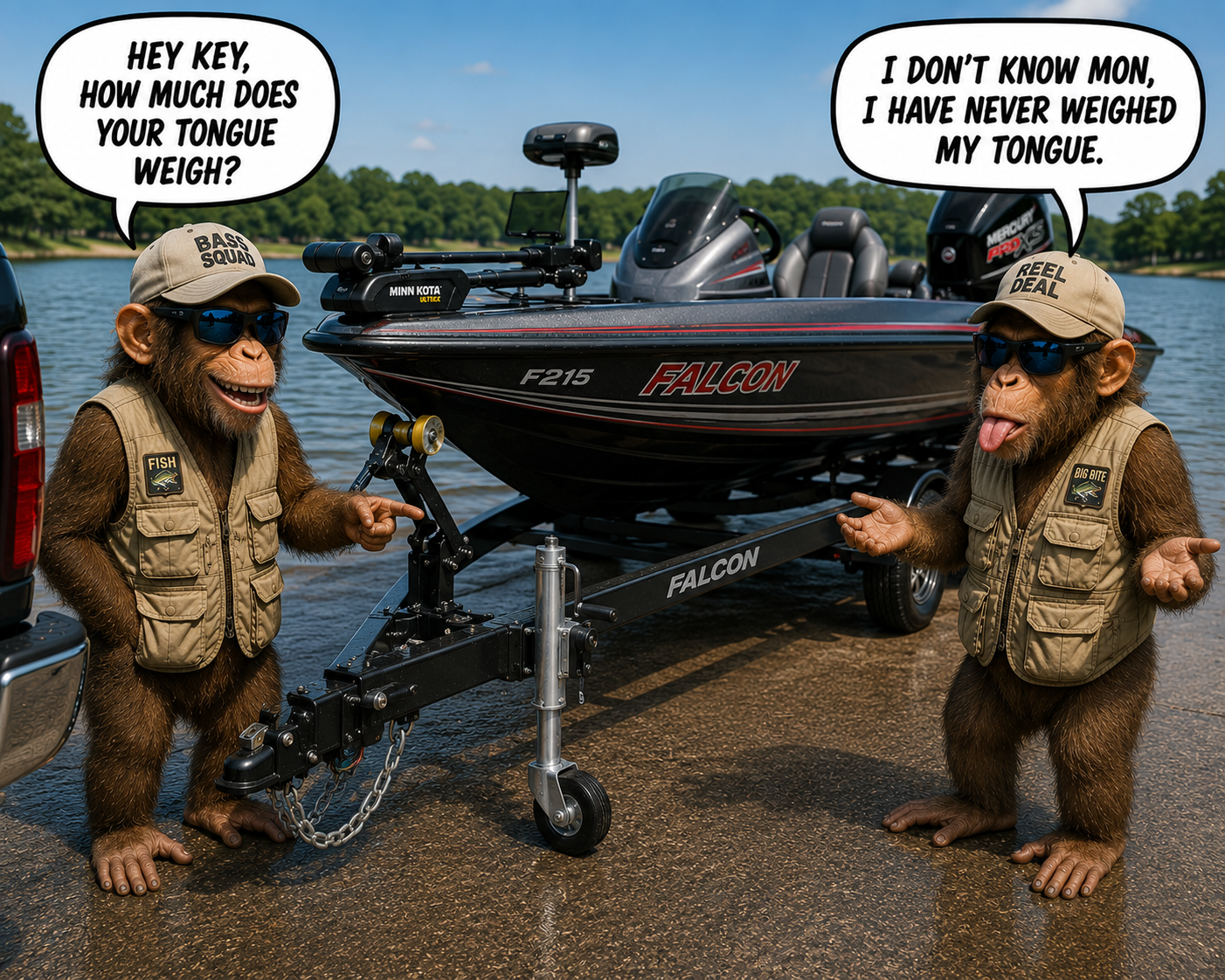
Have you ever been sitting at the boat ramp watching truck after truck effortlessly pull their boats out of the water? Then, suddenly, there's that guy.
His tires are spinning like he's trying to qualify for NASCAR. Friends are piling onto the trailer tongue. Someone is bouncing on the rear bumper. There's a lot of noise, very little progress, and everyone at the ramp has suddenly become an expert.
So, what's going on?
Sure, the ramp could be slick from algae or years of use. But if a dozen other boats made it up the same ramp without drama, chances are the problem isn't the concrete...
It's tongue weight.
Tongue weight is simply the amount of weight pressing down on the hitch of your tow vehicle.
Too little tongue weight doesn't just make it harder to pull your boat up a slippery ramp—it can also make your trailer unstable on the highway, leading to the dreaded trailer sway that nobody wants to experience at 65 mph.
It happens more often than you'd think.
Many boat dealerships purchase boats and trailers separately. Even if the boat fits the trailer perfectly, the setup isn't always ideal. If the boat sits just a few inches too far back on the trailer, tongue weight can be significantly reduced.
Then there's the "THIS BOAT NEEDS EVERTHING INCLUDING THE KITCHEN SINK" syndrome.
Most bass boat owners love upgrades. Unfortunately, many of those upgrades add weight behind the trailer axle:
What about the tri-toon boat with three ice chest full of ice/beer/drinks sitting at the back of the boat. And my favorite, the go fast boat with the new $25K stereo and the additional three/four batteries that are now behind the axles.
Every pound added behind the trailer axle reduces the amount of weight on the tongue.
Individually, these changes may not seem like much. Together, they can make a noticeable difference.
The general rule of thumb is:
Your trailer tongue weight should be between 5% and 10% of the total loaded weight of your boat and trailer.
For example:
If you're already near the low end of that range and having trouble getting traction at the boat ramp, moving the boat slightly forward on the trailer may increase tongue weight enough to solve the problem.
Just remember that small adjustments can make a surprisingly big difference.
You don't need fancy equipment.
Believe it or not, many boat owners measure trailer tongue weight using a simple bathroom scale and a wooden lever setup. There are plenty of excellent videos online that demonstrate the process step-by-step, and it only takes a few minutes.
Before you blame everything on tongue weight, take a look at your tires.
Many aggressive off-road or mud-terrain tires are fantastic in the woods—but not so fantastic on a wet concrete boat ramp. If your truck is equipped with tires designed for mud instead of pavement, they may be contributing to your traction problems.
If you're the one providing entertainment at the boat ramp while your buddies are pushing on your trailer and offering "helpful" advice, don't panic.
Check your tongue weight.
A properly balanced trailer not only makes launching and loading easier, but it also makes towing safer, reduces trailer sway, and may even save you from becoming the star of someone else's boat ramp video.
After all, the only thing that should be making waves is your boat—not your trailer.