



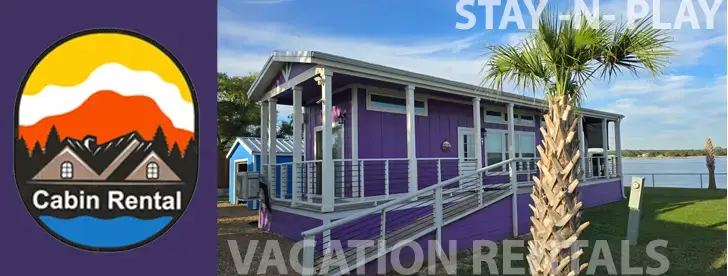



Cabin Rentals
Our cozy Lakeside Cabin Rentals at Lakeview Marina are the perfect way to extend your stay at Eagle Mountain Lake. Whether you're here with a few friends or the whole crew, our cabins offer everything you need for a memorable escape—foosball, shuffleboard, docks, and more! Spend your days on the lake, and in the evenings, stroll over to The Anchor on EML (open seven days a week) or simply enjoy the lakeside sunset. Play a little longer, stay a little longer—your perfect lake getaway is here!
(Click Here) to see more details!

Looking for the ultimate pit stop before hitting Eagle Mountain Lake? Our Bait Shop & Ship Store has everything you need to turn an ordinary lake day into an epic adventure! Need a boat rental? Done. Forgot the fishing gear? We’ve got you covered. Want to chill with an ice-cold beer? It’s waiting! We even have snacks, gas, and all the essentials to keep your day going smoothly. Trust us, you won’t leave empty-handed.
Come on in, grab your gear, and get ready for a day of fun on the lake! (Click Here)

Looking for the perfect lakeside getaway? The Lakeview Marina RV Park has you covered! With spacious sites, easy access to Eagle Mountain Lake, and a boat dock right at your doorstep, it’s the ideal spot for adventure seekers. After a day on the water, unwind with a hot shower or toss a load in our on-site laundry mat. Whether you're here for a weekend or a longer stay, you’ll feel right at home with everything you need for the perfect retreat.
(Click here) to learn more and book your stay!

The Anchor at Lakeview Marina
is the ultimate place to unwind after a fun-filled day on Eagle Mountain Lake. With amazing food, a great atmosphere, and a full-service bar and grill, it’s the perfect spot for friends and family to gather. Enjoy a our lakeside views, or grab a bite for lunch or dinner, all while soaking in the lakeside atmosphere. Whether you're craving a burger or a cold drink, The Anchor on Eagle Mountain Lake has it all. Stop by for great food, fun, and entertainment! Call us at (682) 224-2295 or follow us on facebook at https://www.facebook.com/profile.php?id=61576212793049
(See the MENU for The Anchor EML) - (Click Here)





For anglers and boaters exploring the natural beauty around Central Texas, understanding the boat ramp history in Crowley, Texas is key to appreciating this vital piece of local infrastructure. These ramps are more than just concrete slopes; they represent decades of community development, recreational growth, and consistent access to some of the state's most cherished waterways.
The story of boat access near Crowley mirrors the broader history of settlement in Central Texas itself—a gradual realization that connecting land-based communities with aquatic resources was essential for sustenance, commerce, and ultimately, recreation. This detailed look at Crowley boat ramps provides insight into how these crucial launch points have evolved over time.
Before dedicated public structures existed, accessing waterways required ingenuity. Early settlers relied on natural gradients and rudimentary fords. As the population around Crowley grew throughout the 20th century, the demand for reliable, year-round launching points intensified. This early need shaped how local government planned recreational areas.
The establishment of formal boat ramps was a direct response to increasing motorized boating activity. These initial developments were critical turning points, transforming fishing and general water enjoyment from an arduous undertaking into accessible leisure activities for the community. The history of Crowley's boat ramps is intrinsically tied to Texas’s overall commitment to outdoor recreation.
Over time, simply having a ramp was not enough; it needed to be safe, durable, and capable of handling diverse recreational needs. The development process involved significant engineering improvements:
These continuous improvements highlight that Crowley boat ramps are not static features; they represent ongoing investment in local quality of life and outdoor sport.
Today, the function of these facilities extends far beyond simple launching. They serve as central hubs for community activities related to fishing (especially targeting species found on nearby rivers), kayaking, paddleboarding, and general water sports. The sustained importance of Crowley boat ramps can be seen in their continued maintenance and local patronage.
While angling remains a primary activity drawing visitors to these sites, modern usage is diverse:
The longevity of Crowley boat ramps depends heavily on proper maintenance and community stewardship. The environmental impact from high-use facilities requires careful management to protect the underlying waterways.
Local efforts focus on:
The boat ramp history in Crowley, Texas provides a compelling narrative of growth—a tale told through concrete ramps and deep blue waters. These facilities are vital arteries connecting the heart of Central Texas to its natural aquatic resources.
As outdoor recreation continues to grow in popularity across North Texas, these established Crowley boat ramps will remain essential points for community gathering, sport fishing, and enjoying the unique landscape that defines this part of Texas. Whether you are a seasoned angler or simply seeking an enjoyable day on the water, understanding the history behind your point of access enriches every visit.
A boat ramp serves as far more than just a slipway; it is the critical gateway connecting land transportation with aquatic recreation. Whether you are launching a small fishing skiff or maneuvering a large recreational vessel, understanding how and what type of boat ramp you need is essential for safety, efficiency, and longevity. This comprehensive guide explores everything from choosing the right structure to maintaining your investment in proper boat access.
The function of any reliable boat ramp cannot be overstated. It mitigates the harsh transition between solid ground and unstable water, protecting both expensive equipment and personnel. A poorly constructed or inappropriate boat launch can lead to damaging stresses on vehicles, dragging hulls, and even unsafe launching conditions.
When planning or evaluating a boat ramp structure, several factors must be taken into account:
Selecting the right type of boat access is perhaps the most important decision when planning a waterfront property or public launch site. Different needs require different solutions, from temporary structures to permanent concrete installations.
Concrete ramps are highly durable and provide long-term stability for heavy use. They resist rot and repeated wear better than wooden alternatives. This fixed nature makes them ideal for high-traffic public boat ramp areas, though initial construction costs are higher.
For those who need flexibility, portable boat ramps offer a movable solution. These systems can be easily adjusted to changing water levels or different docking needs. Conversely, fixed concrete boat ramps provide unshakeable dependability and superior structural integrity for daily use.
While concrete is standard, specialized materials are used depending on the environment. For example, composite decking can be utilized in conjunction with a permanent ramp to improve slip resistance without sacrificing durability.
The ideal boat ramp location involves more than just finding water access; it requires thoughtful site planning that considers environmental impact and accessibility. When assessing potential sites for your boat launch, ask yourself these questions:
A proper site evaluation ensures that your investment in a reliable boat ramp will withstand natural forces and heavy recreational use.
Even the most robustly built concrete or wooden structure requires consistent maintenance to remain safe and functional. Neglecting routine upkeep can lead to costly structural failures when you need your boat access the most.
Always ensure that warning signage regarding boat traffic and vehicle speed limits are clearly visible. Proper lighting installation is crucial if the boat ramp will be used near dusk or at night, minimizing trip hazards for users.
Ultimately, a high-quality boat ramp is foundational to safe boating operations and reliable water access. By understanding the different types—from portable solutions to permanent concrete installations—and committing to regular maintenance, boat owners can ensure that their primary point of entry remains functional for years of enjoyable aquatic recreation.
The boat ramp history in Crowley, Texas is deeply interwoven with the economic development of Central Texas and its reliance on local waterways. These ramps are not merely concrete structures; they represent decades of community effort dedicated to preserving recreational access to vital natural resources like rivers and bayous.
To understand boat ramp history in Crowley, Texas, one must look back at the early settlement patterns. Before modern infrastructure was established, accessing waterways for fishing or transportation required makeshift landings. As the area grew and local populations developed an interest in recreational activities, the need for formalized, reliable boating access became critical.
Initially, these ramps were rudimentary—simple graded slopes leading directly into shallow water areas along tributaries feeding larger systems. The early focus was purely utilitarian: getting boats safely from land to deeper waters. This foundational period established a pattern of community investment in waterway infrastructure that continues today.
Crowley's proximity to major Texas river basins meant the consistent need for stable boating access points. The evolution of these ramps paralleled improvements in local transportation and fishing techniques, transforming simple landings into engineered facilities capable of handling modern vessels.
The mid-20th century marked a period where local government initiatives began to formalize what was previously informal access. The establishment of dedicated, permanent concrete ramps signaled that the waterway was deemed an essential public amenity for recreation and sustenance.
This phase saw increased coordination between property owners, recreational groups, and municipal planners focused on mitigating erosion while maximizing usable launching space. This stabilized period allowed Crowley TX boating access points to become reliable year-round destinations.
Today's boat ramps serve a multifaceted role in Crowley. They are critical hubs for recreational fishing, kayaking, and general enjoyment of Central Texas waterways. The continued relevance of these facilities underscores their importance not just historically, but environmentally and socially as well.
The maintenance history of the boat ramps is intrinsically linked to environmental stewardship. Responsible use of local waterway development areas ensures that wildlife habitats remain protected while still providing safe access points for anglers and recreationists alike. The ongoing need for robust, well-maintained structures speaks volumes about the sustained commitment to preserving these natural assets.
In summary, exploring the boat ramp history in Crowley, Texas reveals a narrative of adaptation—from simple necessity dictated by early settlers to sophisticated infrastructure supporting modern outdoor recreation and community life. These ramps remain vital arteries connecting the town to its rich aquatic past and present.
Crowley, Texas offers a unique blend of rich history, close-knit community feeling, and convenient access to regional attractions. For those exploring Central Texas or looking into what it is like living in Crowley, Texas, understanding the essence of this vibrant town is key. Whether you are planning a visit for leisure or considering relocation, learning about the culture, historical significance, and modern amenities available makes discovering everything that Crowley Texas has to offer an engaging experience.
Understanding the history of Crowley Texas provides crucial context for its current character. The area boasts deep agricultural roots, drawing it into key regional development patterns over decades. Early settlement established a community that has steadily grown while maintaining much of its small-town charm. This rich past is woven into the fabric of daily life in Crowley.
Over time, Crowley Texas transitioned from a primarily agricultural center to a growing hub with diverse local businesses and residential areas. The town’s history reflects resilience and community dedication—traits that still define its residents today. Exploring historical markers or visiting local museums can provide tangible connections to the past of this remarkable part of Central Texas.
While Crowley, Texas maintains a comfortable pace of life, it does not lack activities. The region surrounding Crowley offers numerous opportunities for recreation, making it an appealing destination for families and outdoor enthusiasts alike. When planning your time in the area, consider these diverse options.
The heart of Crowley Texas often resides downtown. Taking a walk through the main streets allows visitors to appreciate local architecture and support independent businesses that are cornerstones of the community economy. Many people find joy in simply observing the daily rhythm of life here, which is unmatched by larger metropolitan areas.
The surrounding natural landscape provides excellent opportunities for outdoor pursuits. Depending on your interests, you can enjoy everything from hiking trails to local park activities that allow residents and visitors alike to connect with nature. These nearby green spaces are perfect settings for family outings or quiet contemplation.
Crowley is ideally situated within Attix County, giving locals easy access to a broader range of regional attractions. Whether it involves visiting local parks, attending community events, or exploring historical sites outside the immediate town limits, things to do in Crowley TX extend well beyond its borders.
For those considering making a move, researching what it is like living in Crowley, Texas reveals several compelling advantages. The community reputation centers around safety, strong local schools, and an overall welcoming atmosphere. This balance between small-town intimacy and modern convenience makes the area highly desirable for families.
The commitment of the residents defines much of what it means to call this place home; they take pride in their community.
A robust local economy supports a wide array of shops, restaurants, and service providers throughout Crowley Texas. The support for small businesses is noticeable, providing unique goods and locally sourced dining experiences that enhance the visitor experience. This commercial vibrancy ensures that even during off-peak seasons, there are always activities or services available.
The continued growth of local commerce underlines the enduring appeal of Crowley Texas as both a place to visit and a community to invest in. The careful blend of preserving historical character while embracing modern development is particularly notable.
In summary, whether you are delving into local history books or simply looking for the perfect weekend getaway, Crowley Texas consistently delivers a rewarding experience. The combination of deep Texan heritage, accessible outdoor recreation, and an exceptionally warm community atmosphere makes it a standout destination in Central Texas.
We encourage visitors to take time to explore beyond the main thoroughfares; wandering through different neighborhoods is often where you discover the most authentic charm when exploring Crowley TX. The town awaits your discovery!
For millions who enjoy recreational boating, a boat ramp is more than just concrete; it is a gateway to adventure and freedom on the water. Understanding the boat ramp history reveals a fascinating story of human ingenuity—a continuous effort to connect land-based vehicles with aquatic leisure activities. From simple wooden slipways used by early mariners to today's massive, engineered composite structures, the evolution of boat ramps reflects advancements in civil engineering and the growing popularity of personal watercraft.
To grasp modern boat ramp history, one must first look back before concrete poured over asphalt. In early eras, launching a vessel was often rudimentary. Before dedicated infrastructure existed, boat owners relied on natural shorelines or simple log structures built directly into the banks. These initial launch points were highly dependent on geography and weather.
As boating became more organized during the 19th century, basic wooden slipways began to appear near established waterfronts. These early systems served a crucial purpose: providing enough graded slope for wheels (or dragging) while minimizing damage to both the vessel hull and the surrounding natural environment. The focus then was purely functional—getting boats in and out safely.
The industrial revolution spurred massive growth in water-based recreation, demanding more reliable launch points. This need accelerated the evolution of boat ramps from simple wooden walkways into semi-permanent engineered structures. The shift was significant: moving away from relying solely on natural gradients towards controlled descent.
Early concrete pourings marked a major turning point in this history. Concrete offered durability and stability unmatched by wood, allowing ramp builders to create consistent grades regardless of seasonal water level fluctuations or soil instability. This standardization greatly improved safety and efficiency for vehicle launch operations.
The materials used are perhaps the most telling aspect when studying boat ramp history. Each material change represents a leap in technology:
Today’s understanding of boat ramp history also encompasses a growing awareness of sustainability and accessibility. Modern ramps must meet stringent engineering requirements that go far beyond just providing a slope.
Safety features are paramount. Contemporary designs incorporate slip-resistant surfaces, proper grading to manage tides and currents effectively, and robust drainage systems. The inclusion of designated vehicle paths ensures smooth operation for tow vehicles.
A major focus in modern boat ramp history is minimizing environmental damage. Engineers now design ramps with consideration for riparian zones (the area between land and water). This includes implementing materials that resist leaching into the waterway, managing runoff pollution from vehicle use, and designing structures that allow natural aquatic life passage underneath or around them.
The trajectory of boat ramp history is one defined by adaptation. What began as a simple necessity—a way to get boats into the water—has matured into sophisticated civil engineering projects. As boating continues to grow and environmental concerns become more critical, future designs will likely focus on modularity, reduced ecological footprint, and even self-repairing materials.
From rudimentary wooden slipways to highly engineered composite launch systems, the boat ramp stands as a testament to human adaptation—a vital piece of infrastructure that continues to connect people with the unparalleled experience of life on the water. Understanding this history allows us to appreciate not only its engineering complexity but also the enduring passion it serves.
Understanding boat ramp history reveals a fascinating evolution in human interaction with waterways. The development of dedicated launching points is not merely an architectural trend; it reflects advancements in marine technology, recreational needs, and civil engineering over centuries. Originally, accessing the water was dictated by natural geography—a gentle slope or riverbank sufficient for small craft.
In early times, boats were launched using simple methods that relied entirely on topography. The concept of a dedicated "boat ramp" as we know it today did not exist. Instead, people utilized natural inclines or shallow riverbeds where the grade gradually met the water line. These initial access points required minimal engineering but limited the types and sizes of vessels that could be launched.
As boating became more common during periods like the Age of Sail, rudimentary support structures began to appear. Simple jetties and fixed docks were built perpendicular or parallel to shorelines to assist in loading and unloading boats. These early systems addressed docking needs but did little for the crucial process of moving a vessel from solid ground into deeper water.
A major turning point in boat ramp history coincided with industrial advancements, particularly after the 19th century. The increased size and power of recreational vessels necessitated more reliable, durable, and predictable launching methods than natural banks could provide. This era marked the beginning of engineered concrete ramps.
Modern marina infrastructure represents the culmination of centuries of learning from boat ramp history. Today’s structures are highly complex systems designed for maximum throughput and safety.
Today's engineered ramps address several key challenges:
The journey of the dedicated launching point—the boat ramp—is a microcosm of civil engineering history itself. What began as simply following nature’s grade has evolved into sophisticated, safety-conscious infrastructure capable of supporting diverse marine activities globally. The continuous refinement in materials and design underscores the enduring relationship between human recreation, maritime technology, and innovative structural development.
The ongoing improvements continue to focus on sustainability and environmental impact mitigation while ensuring that reliable access remains available for all boat owners.
To understand modern Central Texas, one must delve into the fascinating narrative that constitutes the Crowley Texas history. From a humble frontier settlement to a thriving community today, the growth of Crowley is a testament to resilience, strategic location, and the pioneering spirit of its early residents. The story of this town intertwines with major regional developments, particularly those related to transportation and agriculture.
Before formalized development occurred, the area that would become Crowley was part of a vast frontier landscape. Like many towns across North Texas, initial settlement waves were driven by economic opportunity and land availability. The early settlers faced the challenges typical of pioneer life—building communities from scratch while navigating an untamed environment.
The foundational years laid down crucial cultural roots that persist today. These pioneers established a strong sense of community necessary for survival and eventual prosperity. Learning about early settlement in Crowley TX reveals a deep commitment to making the area a permanent home, setting the stage for dramatic growth when external influences began arriving.
Crowley's location within Central Texas proved invaluable. Access to fertile land and key travel routes meant that while it was initially remote, its potential for commerce grew steadily. The natural resources dictated early economic pursuits, focusing heavily on farming and livestock before industrialization took hold.
Perhaps the single greatest factor accelerating Crowley Texas history was the arrival of the railroad. Infrastructure development fundamentally altered small towns across America, turning them from isolated outposts into nodes of commerce. When rail lines reached this area in the late 19th century, everything changed overnight.
The railway did more than just move goods; it connected Crowley to national markets and allowed diverse populations—merchants, workers, and specialized tradespeople—to settle permanently. This influx fueled rapid construction of businesses, housing, and civic institutions necessary for a growing urban center. The railroad impact on the town’s economy was immediate and profound.
The period following the early 20th century marked a shift in Crowley's economic identity. While agriculture remained important, industrial diversification began to take root. The town adapted to changing national economies by attracting various industries that required reliable logistics—a benefit derived directly from its historical transportation connections.
A cornerstone of the community’s sustained growth has always been education and civic pride. Investment in schools, local government services, and cultural institutions ensured that Crowley Texas history was not just one of commerce, but also of enduring family life. These elements allowed Crowley to maintain its small-town charm while accommodating modern suburban expansion.
The subsequent decades saw the establishment of various commercial centers and residential areas, solidifying Crowley's role as a significant population center within Central Texas County.
When reviewing Crowley Texas history, several defining elements stand out:
The story of Crowley is not simply a timeline of buildings; it is the narrative of adaptation and community cohesion. It showcases how critical infrastructure, combined with human tenacity, shapes lasting American towns.
Today, as residents continue to build upon centuries of history, Crowley Texas stands as a vibrant example of Central Texas resilience. From the earliest wagon trails crossed by pioneers to the modern highways connecting it to major metropolitan areas, its journey is rich and complex. Understanding this deep-rooted past provides invaluable context for appreciating what makes Crowley such an important part of regional heritage.
The continued preservation of local historical narratives ensures that future generations can appreciate the remarkable path taken by Crowley Texas over time.
Exploring Crowley Texas history reveals a rich tapestry woven from frontier resilience, agricultural development, and community spirit. Understanding the deep roots of this area provides valuable insight into modern Central Texas life.
The early days of what would become Crowley are deeply tied to the broader settlement patterns of North Texas during the 19th century. Before formal establishment, the land was utilized by Native American tribes and later became part of major migration routes. The push for agriculture gradually transformed this frontier area into a desirable location for settlers looking for fertile ground. Early pioneers faced the typical challenges associated with developing remote settlements in Central Texas.
The naming and initial development process involved various groups staking claims, leading to the gradual consolidation that defined early Crowley TX history. These foundational years were critical, setting the stage for the rapid growth seen in later decades of Crowley's story.
A defining characteristic throughout Crowley Texas history has been its connection to agriculture. The fertile soil proved ideal for farming, allowing early settlers to cultivate crops and raise livestock. This agricultural backbone was not merely a source of sustenance but the primary economic engine that fueled community growth. Over time, local farmers were instrumental in developing infrastructure—roads, rail lines, and markets—that connected Crowley TX to larger regional economies.
The evolution from subsistence farming to commercial agriculture marks a significant chapter in understanding this area's development. The dedication of generations of families to the land remains central to the narrative of Crowley Texas history today.
A pivotal moment in the expansion of Crowley was the arrival of major railway lines. Railroad infrastructure fundamentally altered how goods moved through Central Texas, transforming small farming communities into thriving commercial hubs. This period saw a dramatic increase in population density and economic activity within Crowley.
The establishment of key businesses centered around rail transport further solidified its role as an important stopover point and regional center. The narrative detailing the transition from purely agrarian life to one incorporating industrial commerce is vital when studying Crowley Texas history.
Beyond economics, social development shaped the character of Crowley TX. As the population grew, so did civic institutions—schools, churches, local governance structures, and community gathering places. These organizations provided stability and a shared identity that allowed the town to flourish despite its geographic location.
The push for better educational facilities and public health initiatives reflects the growing sophistication of life in Crowley Texas. Community involvement has always been paramount; residents have consistently worked together to improve local amenities, defining much of modern community spirit found throughout the area.
Today, while agriculture remains important, the history of Crowley also reflects a successful adaptation to modern challenges and opportunities. The continued relevance of studying Crowley Texas history provides lessons in resilience—the ability of a small Central Texas community to evolve economically while maintaining its historical character.
From humble frontier beginnings through agricultural boom times and into today's diverse commercial landscape, the story of Crowley is one of steady growth, adaptation, and deep-rooted commitment to place. Learning about this rich history enhances appreciation for life in Central Texas.
For residents and visitors alike who cherish Central Texas waterways, boat ramp history in Crowley, Texas is more than just a tale of concrete infrastructure; it is a story woven into the fabric of local recreation, commerce, and community development. The ability to access navigable water has always been crucial to this region's lifestyle, transforming simple creeksides into vital hubs for fishing enthusiasts and recreational boaters.
Understanding the boat ramp history in Crowley Texas requires looking back at a time when transportation relied heavily on waterways. Before modern highways crisscrossed the area, rivers and smaller tributaries served as primary routes of travel and livelihood. These early needs laid the groundwork for the specialized facilities we know today.
In the earliest days surrounding Crowley, water access was a matter of necessity rather than pure recreation. Early settlers needed reliable ways to move goods, fish for sustenance, and navigate through what were often muddy or shallow banks. The initial "boat ramps" weren't always engineered structures; they were simply designated areas where boats could safely launch from the natural shoreline.
As Crowley grew into a more established community, the need for reliable fishing access points in Crowley TX became apparent. These early informal launching spots marked critical turning points, signaling that water-based activities—particularly fishing and small boat travel—were becoming integral parts of local life. The gradual formalization of these launch areas is key to understanding modern boat ramp history in Crowley Texas.
The transition from informal beaching spots to engineered concrete ramps represents a significant leap forward for recreational boating. As vehicular traffic increased, so did the demand for easy and safe boat launching. This era saw local engineers realizing that dedicated infrastructure was needed to handle modern powerboats safely.
The development of these specialized facilities required coordinating land use with hydrology. Local authorities had to balance environmental preservation—maintaining natural shorelines and aquatic habitats—with the practical needs of boat owners who desired quick, reliable access. The construction methods used over decades reflect advances in civil engineering tailored specifically for river bank stability.
These dedicated launch ramps solidified Crowley's reputation as a premier destination for outdoor activities. They provided predictable and safe means of entry into the water, dramatically improving both safety statistics and overall recreational usage compared to earlier times when access was dependent on natural conditions like tides or seasonal changes in river levels.
Today's boat ramp history in Crowley Texas tells a story of adaptation. These ramps are no longer just single-use launching spots; they function as community anchors and centers for outdoor recreation. They support everything from competitive fishing tournaments to family weekend getaways.
When considering boat ramp history in Crowley TX today, it is clear that these structures represent a continuous commitment to the local environment and community quality of life. They facilitate deep connections between people and nature.
The journey from natural shorelines to highly engineered concrete ramps highlights human ingenuity meeting geographical necessity. The evolution shows how essential structured access is for maintaining a vibrant outdoor culture in the heart of Texas.
In conclusion, studying boat ramp history in Crowley Texas reveals not merely changes in construction materials, but profound shifts in community priorities—a shift toward valuing accessible water recreation and enjoying the natural beauty that Central Texas offers to boaters everywhere. The ramps remain vital links connecting people to their favorite waters.
A well-designed and properly maintained boat ramp is far more than just a pathway; it is essential infrastructure that connects land access points with navigable waterways. Whether you own a small fishing vessel or operate commercial marine craft, understanding the functionality, required materials, and best practices for your boat ramp is crucial for safety, efficiency, and longevity of both the structure and your boat.
This comprehensive guide explores everything surrounding the ideal boat ramp experience—from initial design considerations to ongoing maintenance tips. By mastering these elements, you can ensure safe launching and retrieval every time you visit a marine location that utilizes or requires a quality concrete or composite boat ramp structure.
The effectiveness of any boat launch facility hinges on its design. A poorly graded or constructed boat ramp can pose significant safety hazards, leading to equipment damage and potential accidents. Proper engineering must account for tidal changes, water flow dynamics, slope gradients, and the specific types of vessels expected to use it.
One of the most critical factors in boat ramp design is the gradient or slope angle. The transition from land (or pavement) into the water must be gradual enough for boats to enter smoothly without sudden jolts, but steep enough that it doesn't become a liability hazard when wet.
When considering new installation or major repairs to an existing boat ramp, the material is key. The chosen substance must resist salt corrosion, cyclical freezing and thawing (if applicable), and heavy vehicular traffic.
Since the primary function of a boat ramp involves moving large objects (boats) over an uneven surface into water, safety must be paramount in every aspect of its construction and operation.
Water always reduces traction. Therefore, anti-slip surfaces are non-negotiable features for any operational boat ramp. This can involve specialized aggregate mixtures incorporated into the concrete or applying high-friction coatings to prevent slips from vehicles entering or exiting the water.
Effective drainage prevents standing puddles on the surface of the boat ramp, which drastically compromises traction for both tires and hulls. Proper grading ensures that runoff moves safely away from sensitive areas while keeping the main path clear.
A boat ramp is not a set-it-and-forget-it structure. Regular, proactive maintenance significantly extends its lifespan and keeps it safe for boaters. Neglecting simple upkeep can lead to major structural failures.
Water flow naturally causes erosion around launching points. If you notice significant scouring or undermining at the edges of your boat ramp, professional engineering assessment is required immediately to prevent structural collapse.
When planning for boat access—whether you are building new infrastructure or assessing an existing launch site—always consider local regulations. Municipal codes dictate minimum slope angles, runoff requirements, and environmental impact considerations unique to your geographic area.
Remember that the entire user experience is tied up in the boat ramp process. A smooth transition means less stress on boat engines, safer loading/unloading for passengers, and a vastly improved overall recreational or commercial outing. Investing time and resources into understanding


